
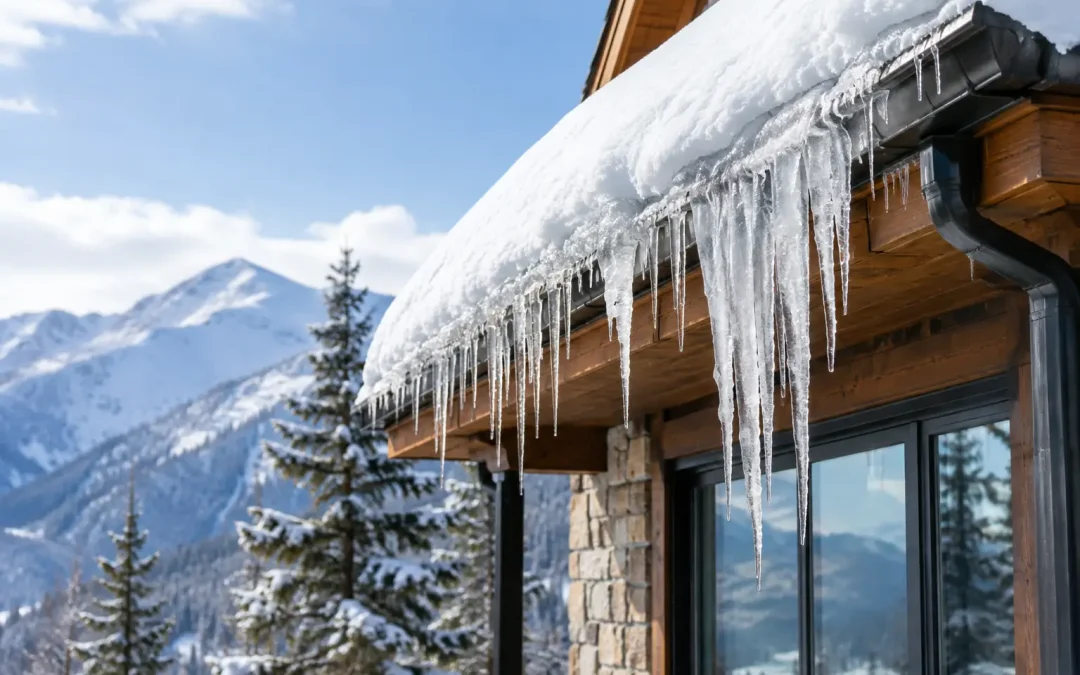
A clear, sunny Durango winter day can create trouble at the roofline. Snow begins to melt on the warmer upper portion of a roof, then the water reaches a colder eave and freezes again. The resulting ridge of ice can look harmless from the driveway, but it may hold water against shingles and send it where it does not belong. That is what causes ice dam damage: a temperature imbalance that turns ordinary snowmelt into trapped water.
For mountain homeowners, especially those who are away for part of the season, ice dams deserve prompt attention. The visible ice is only part of the concern. Water can work beneath roofing materials, into attic insulation, across ceilings, and down exterior walls before a stain appears indoors.
What Causes Ice Dam Damage on a Roof?
An ice dam forms when sections of a roof are above freezing while the roof edge remains below freezing. Snow on the warm section melts, and meltwater travels downward under the snowpack. At the cold overhang, it refreezes. As that ice thickens, it creates a barrier. New meltwater backs up behind it and can be pushed under shingles by gravity, wind, capillary action, or repeated freeze-thaw cycles.
Snow itself is not the problem. A uniformly cold roof can hold snow without developing an ice dam. The problem begins when heat from the home reaches the roof deck unevenly.
In Durango and the surrounding mountain region, conditions often line up for this cycle. Deep snowfall, bright sun, cold overnight temperatures, and large day-to-night temperature swings can produce repeated melting and refreezing. A roof that performs adequately during a short snow event may struggle after several storms leave a deeper insulating blanket on the roof.
Heat loss from the attic
The most common contributor is heat escaping into the attic. Warm air rises through gaps around recessed lights, plumbing vents, attic hatches, chimney chases, wiring penetrations, and unsealed wall tops. That warm air heats the underside of the roof, allowing snow above it to melt.
Insulation helps slow heat transfer, but insulation alone does not stop air movement. In fact, adding more insulation over active air leaks can leave the underlying problem unresolved. Proper air sealing and correctly installed insulation work together to keep the roof deck closer to the outdoor temperature.
Uneven insulation and difficult roof geometry
Luxury mountain homes often have vaulted ceilings, dormers, skylights, multiple rooflines, cantilevers, and architectural details that make insulation continuity more challenging. A narrow underinsulated area can create a warm strip on the roof. From the exterior, it may appear as an early-melting patch while neighboring snow remains in place.
These localized warm areas can form dams in places that are easy to overlook, such as valleys, roof-to-wall transitions, and low sections behind dormers. The roof may not need to be broadly failing for a single vulnerable area to leak.
Air leakage and pressure differences
Air leaks can be more damaging than homeowners expect because they carry heat and moisture. A home under slight pressure may push warm indoor air into the attic through openings that are invisible from below. Kitchen exhaust, bathroom fans, fireplaces, and mechanical systems can also affect how air moves through the house.
This is why an ice dam investigation should look beyond the shingles. The source may be a gap in the building envelope, a disconnected duct, or an exhaust fan venting into the attic rather than outdoors.
Limited attic ventilation
Ventilation can help remove moisture and moderate attic temperatures, but it is not a stand-alone cure for ice dams. Soffit vents blocked by insulation, undersized ridge vents, or interrupted air channels can limit airflow and contribute to a warmer roof deck.
At the same time, ventilation should be evaluated as part of the entire roof and attic system. Adding vents without addressing air leaks or insufficient insulation may not solve the issue. In some homes, especially those with complex roofs or conditioned attic spaces, the right solution depends on the home’s design and should be determined by a qualified local professional.
How Ice Dams Damage a Home
The primary risk is water backup beneath the roof covering. Shingles are designed to shed water flowing down the roof, not to hold standing water that has accumulated behind a wall of ice. Once water gets beneath the shingles, it can reach the roof deck and underlayment.
Early warning signs include unusually large icicles, thick ice along the eaves, a band of bare roof above a snow-covered lower edge, or water dripping from soffits. Inside, look for ceiling stains, peeling paint, damp window trim, musty odors, or wet insulation in upper-level rooms. These signs may appear after the active snowfall has ended, since the damage often develops during thawing periods.
Repeated wetting can damage roof sheathing, fascia boards, soffits, drywall, flooring, and insulation. Wet insulation loses effectiveness, which can make roof warming worse and increase the chance of another dam. If moisture remains trapped, mold growth and wood deterioration may follow.
For a seasonal residence, the consequences can be more extensive. A minor leak that begins after departure may continue through several weather cycles before anyone sees the interior evidence. Regular winter oversight provides an opportunity to identify changes at the roofline and inside the home before a small water intrusion becomes a more involved repair.
Warning Signs That Call for Attention
Not every icicle signals an emergency, but a few conditions should prompt a closer look. A persistent ice ridge at the eaves, water stains on upper ceilings, visible sagging in gutters, or ice building up around skylights and valleys are all reasons to act.
Pay particular attention when snow melts unevenly from the roof. If one section clears quickly while the lower edge remains heavily iced, the roof deck may be receiving heat from below. Also watch for ice forming at exhaust vents or plumbing penetrations, where warm air may be escaping.
Never climb onto an icy roof or use an axe, hammer, or metal shovel to break ice free. Damaging shingles, flashing, gutters, or yourself creates a much larger problem. If active leaking is occurring, protect furnishings, contain the water where possible, and arrange for qualified help promptly. A roofing professional may use controlled steam removal, which is far safer for the roof than chopping at the ice.
Preventing Ice Dams Before Snow Arrives
The most reliable prevention begins before winter. A careful attic and roof review can identify heat-loss patterns, ventilation restrictions, deteriorated flashing, and insulation gaps. This work is especially valuable after a remodel, a new roof installation, or changes to lighting, mechanical equipment, or exhaust systems.
Effective prevention commonly involves several coordinated measures rather than one product or repair. Air sealing attic-floor penetrations is often the first priority, followed by improving insulation coverage and ensuring the attic is ventilated according to the home’s design. Roof valleys, flashing, gutters, and downspouts should also be inspected so meltwater has a clear path away from the structure when temperatures rise.
Heated roof cables can be useful in carefully selected locations, but they are not a substitute for correcting heat loss. They may create drainage channels through ice in problem areas, yet they use energy, require monitoring, and can detract from a clean roofline if installed poorly. Their value depends on the roof configuration and the underlying cause of the ice buildup.
During winter, safely removing excess snow from the lower edge of the roof with a ground-operated roof rake can reduce the amount of meltwater available to feed a dam. This is most practical on accessible, lower-pitch areas and should be done gently to avoid pulling at shingles. Steep roofs, high elevations, and complex rooflines are better left to insured professionals with the appropriate equipment.
A Proactive Plan for Second-Home Owners
A home does not need to be occupied every day to be protected. It does need a dependable winter plan. That plan should include properly managed indoor temperatures, routine exterior observation after significant storms, interior checks of upper floors and ceilings, and a clear process for bringing in the right trade partner if conditions change.
At Elevation Home Management, winter home oversight is designed to provide that local, accountable layer of care. Detailed checks can reveal signs of roofline ice, interior moisture, or changing conditions while there is still time to coordinate a response with trusted local professionals.
The goal is not to remove every icicle from a Durango home. It is to understand why ice is forming, protect the roof and interior from standing water, and make sure your residence remains cared for while you spend your time enjoying Colorado rather than managing a winter maintenance surprise.