
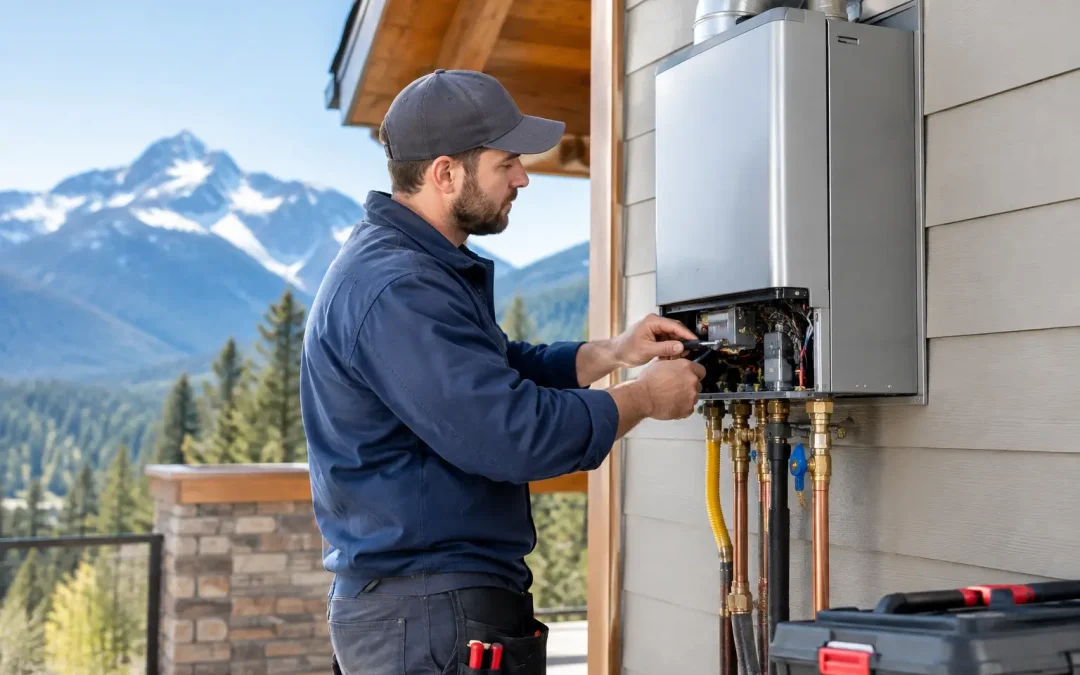
A tankless water heater can be an excellent fit for a second home: it does not keep a large tank of water heated around the clock, takes up relatively little space, and can provide dependable hot water when the house is occupied. But tankless heater servicing is not a set-it-and-forget-it task, particularly in a mountain property that may sit empty for weeks or months at a time.
When a tankless unit develops a problem, it usually becomes apparent at the least convenient moment – during a late-night arrival, before guests come over, or while preparing the home for a long stay. Regular attention helps identify small performance issues before they turn into no-hot-water calls, error codes, or an urgent need to coordinate a technician from out of town.
Why tankless water heaters need regular attention
Unlike a conventional water heater, a tankless unit heats water only when it senses flow. Inside the appliance, a heat exchanger rapidly warms water as it passes through. That process is efficient, but it also means the unit depends on several components working properly at once: adequate water flow, clean filters, reliable ignition, proper combustion or electrical operation, and unobstructed venting.
Mineral content in the water can gradually collect inside the heat exchanger. This is often referred to as scale. Even when water does not seem especially hard, small mineral deposits can reduce efficiency over time. The unit may work harder to reach the requested temperature, deliver inconsistent hot water, or display a maintenance-related error code.
For second-home owners, inactivity adds another consideration. A home that is vacant for part of the year may not reveal declining performance until the system is called on heavily during an arrival weekend. A unit can appear fine during a brief inspection, then struggle once multiple showers, laundry, and kitchen use begin. That is why service timing matters as much as the service itself.
What professional tankless heater servicing typically includes
The exact scope depends on the manufacturer, model, fuel type, installation, water conditions, and service history. A qualified plumbing or HVAC professional should follow the equipment manufacturer’s guidance. In general, a thorough visit often includes inspection, cleaning, testing, and documentation of the unit’s condition.
A technician may flush the heat exchanger using an approved descaling solution to remove mineral accumulation. They may also inspect and clean the cold-water inlet filter, check fittings and valves for signs of seepage, and confirm that condensate drainage is clear on condensing gas models. If the unit has a recirculation pump or integrated recirculation feature, that system deserves attention as well.
For gas-fired equipment, safe combustion and venting are central to the service visit. The professional may inspect the gas connection, ignition sequence, exhaust and intake piping, and related safety components. Electrical units have different requirements, including inspection of electrical connections and controls. These are not homeowner maintenance tasks to improvise, especially in a high-value home where proper installation and manufacturer compliance matter.
A useful service record should note the date, work completed, observed condition, error codes if any, and recommendations for follow-up. That record is valuable when a home is owned from afar. It allows the homeowner and property manager to see whether a minor observation is new, recurring, or already being addressed.
The overlooked parts: filters, drains, and vent terminals
Some of the most disruptive tankless-heater issues are not failures of the heat exchanger itself. A partially clogged inlet screen can restrict water flow. A blocked condensate drain can cause a condensing unit to shut down. Exterior intake and exhaust terminations can collect windblown debris, insect nesting material, or snow and ice under the right conditions.
In Southwest Colorado, exterior equipment deserves a visual check after significant weather and before periods of occupancy. That does not mean removing vent components or attempting repairs. It means recognizing that a clear, undamaged exterior termination and a dry mechanical area are worth reporting before a small issue becomes a service interruption.
How often should a tankless unit be serviced?
Annual service is a sensible baseline for many homes, and some manufacturers specifically recommend it. The right interval can be shorter when water conditions create more mineral buildup, the home has high hot-water demand, or the equipment has previously shown flow or scale-related issues.
A second home may have modest annual water use but still benefit from yearly review. The goal is not simply to count gallons used. It is to confirm that a system will operate reliably after periods of low use, that its safety-related components remain in good condition, and that no small leak or drainage issue has developed in the mechanical room.
There is also a practical scheduling question. If your family typically begins using the home regularly for ski season, arrange service before that first extended visit rather than waiting for the busiest holiday period. For properties used mainly in warmer months, schedule service ahead of spring or summer arrival. Service providers are often busier during cold snaps, when a planned appointment can quickly become an emergency call.
Signs your tankless heater may need attention sooner
A homeowner does not need to diagnose the appliance, but certain changes should prompt a call to a qualified professional. Watch for recurring error messages, water that runs hot and cold during a shower, noticeably reduced hot-water flow, unusual clicking or fan noise, or longer-than-usual delays before hot water reaches fixtures.
Also take seriously any moisture around the unit, corrosion on nearby connections, drainage where it does not belong, or an odor that seems related to fuel gas. If a gas odor is present, leave the area and follow your gas utility’s safety instructions rather than investigating the source yourself.
For a home that is unoccupied, these signs may be discovered during a routine property visit. A visual inspection of the mechanical area can catch a drip, an unfamiliar display message, or a change in the equipment’s operating sound. It cannot replace licensed service, but early observation makes it easier to coordinate the right professional before an owner arrives.
Tankless systems and the realities of a mountain second home
Tankless units are often installed in utility rooms, garages, crawlspaces, or exterior locations. Each setting changes what should be monitored. An indoor mechanical room should remain accessible, dry, and free of stored items that block service access. A garage installation may face larger temperature swings. An exterior installation requires careful attention to the manufacturer’s cold-weather requirements and the condition of its protective enclosure.
Altitude also makes proper installation and service especially important. Gas appliances may require specific setup considerations at higher elevations, and venting must be installed precisely for the model. If a unit has repeated ignition or combustion-related concerns, the answer is not to reset it repeatedly. It is to have a qualified technician evaluate the system and its installation.
Another common second-home issue is delayed discovery. A small condensate issue, a filter restriction, or a control fault may not be noticed if no one is using hot water every day. Consistent home oversight closes that gap. During scheduled visits, a property professional can note visible concerns, verify that the area is orderly and accessible, coordinate a licensed vendor, and provide the owner with clear follow-through.
Questions to ask when coordinating service
When arranging tankless heater servicing, ask whether the visit includes flushing the heat exchanger, cleaning the inlet filter, inspecting venting and condensate management where applicable, and checking for stored error codes. It is also reasonable to ask what the technician found, whether any parts show early wear, and when the next service should be planned.
If your property has more than one water-heating appliance, label each unit clearly and keep model and serial information with the home’s maintenance records. This saves time when coordinating work remotely. It also helps ensure the technician arrives prepared with the right service kit and understands which unit serves which part of the house.
For owners who are away, the most useful outcome is not merely a completed invoice. It is confirmation that the work was performed, the unit was tested, any recommendation is clearly explained, and the mechanical area was left in good order. Elevation Home Management can help identify concerns during property visits, coordinate qualified local professionals, and keep maintenance details organized for the homeowner.
A well-maintained tankless water heater is easy to overlook, which is exactly the point. With timely professional service and attentive oversight between visits, hot water is one less detail to manage when it is time to enjoy your home and spend more time living your best life in Colorado.