
A plumbing leak in a primary residence is often noticed quickly: a damp cabinet, an unusual sound, or a water bill that does not look right. In a second home, the same small leak may continue unnoticed for weeks. Learning how to identify plumbing leaks early is one of the most practical ways to protect a mountain property from avoidable water damage, mold, material deterioration, and disruptive repairs.
For homes in Durango and surrounding Southwest Colorado communities, absence is often the deciding factor. A pinhole leak under a sink, a failing supply line behind a toilet, or a slow drip at a mechanical connection may not seem urgent on the day it begins. Left alone through a period of vacancy, however, it can affect flooring, cabinetry, drywall, and adjacent rooms.
Why leaks can be harder to spot in a second home
Many plumbing leaks start quietly. They do not always create a visible puddle or a dramatic drop in water pressure. Instead, moisture may collect inside a vanity, behind an appliance, below a water heater, or in an unfinished utility area where no one routinely looks.
Mountain homes can add another layer of complexity. Plumbing may run through crawl spaces, lower-level utility rooms, exterior walls, or remote portions of a large floor plan. Homes with radiant heating, water treatment equipment, humidifiers, ice makers, and multiple guest bathrooms have more connections to inspect than a simple cabin with one kitchen and bath.
Seasonal occupancy also changes what is normal. A higher water bill may be easy to dismiss as irrigation, a visiting family member, or a recent service appointment. A musty odor may be blamed on a closed-up house. Those explanations are possible, but they should not prevent a closer look.
How to identify plumbing leaks before damage spreads
The most reliable approach is to combine a few simple observations with regular, documented checks. No single sign proves there is a leak, but several small changes together deserve attention.
Start with the water meter
A water meter can reveal water movement that is otherwise invisible. First, make sure no one is using water inside or outside the home. Turn off faucets, avoid flushing toilets, pause irrigation if applicable, and allow appliances that use water to finish their cycles.
Record the meter reading, or take a clear photo of the dial. Wait at least one to two hours without using water, then check it again. If the meter has changed, water is moving somewhere in the system. Some meters include a small leak indicator that spins or flashes even with very low flow.
This test is useful, but it has limits. A water softener regeneration cycle, an automatic humidifier, a refrigerator ice maker, a boiler fill valve, or irrigation equipment can affect the result. If the meter indicates activity, isolate likely sources when practical or ask a qualified plumber to investigate. Do not assume the issue is inside the house without considering exterior lines and irrigation zones.
Look where water connections are hidden
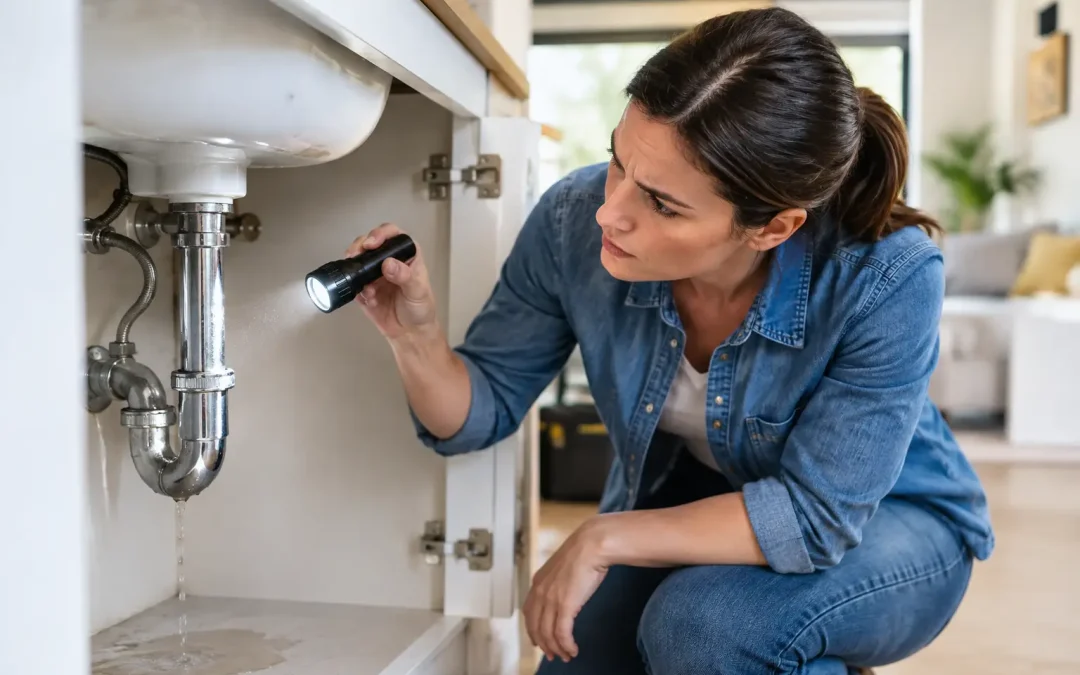
During a property visit, open the places that are easily overlooked. Check below kitchen and bathroom sinks, around toilets, at washing machine connections, near the dishwasher, behind accessible refrigerator lines, and around water heaters and filtration equipment.
Pay attention to more than active drips. A white or greenish crust on a fitting, rust on a shutoff valve, swollen cabinet bottoms, warped baseboards, or darkened wood can indicate a slow, recurring leak. On copper lines, blue-green staining is worth noting. On flexible supply hoses, corrosion around a connection or a bulge in the hose calls for prompt professional evaluation.
Use a flashlight and run a clean, dry hand or paper towel around accessible fittings. A connection can feel damp long before it produces enough water to pool on the floor. Avoid disturbing old valves or fittings that appear heavily corroded. Moving them may turn a small problem into an active leak.
Notice changes in surfaces, air, and sound
Water often announces itself through building materials before it becomes visible. Fresh staining on a ceiling, paint that is bubbling or separating, flooring that cups at an edge, or a baseboard that has pulled away from the wall may point to moisture behind the finish.
Odor matters as well. A persistent musty smell in one closet, bathroom, lower level, or utility area deserves investigation, especially when the home has been closed for a period. The source may be seasonal humidity or an old drainage issue, but concealed moisture should be ruled out.
When the house is quiet, listen near bathrooms, mechanical rooms, and walls containing plumbing. A faint hiss, periodic refill sound, or water movement with all fixtures off can offer a clue. Toilets are especially common culprits. A toilet that refills briefly every few minutes may have a worn flapper that allows water to leak from the tank into the bowl. That is not usually a structural water-damage issue, but it can waste substantial water and may be missed in an unoccupied home.
Watch utility use over time
A single utility bill rarely tells the whole story. Comparing monthly use across similar periods is more useful. If the home is vacant and water use rises without an obvious reason, investigate before the next billing cycle.
Smart water monitors can be helpful for homes that sit empty regularly. Depending on the system, these devices may detect unusual flow, send alerts, or allow remote shutoff. They are not a substitute for an in-person inspection. A monitor may not identify moisture from a drain leak, a roof intrusion, or a slowly failing appliance that only leaks during use. Still, for the right property, it can provide an additional layer of awareness between visits.
Do not overlook drains and appliance lines
Not every plumbing leak comes from a pressurized water supply. Drain lines can leak only when a sink, shower, dishwasher, or washing machine is used. This makes them harder to catch in a house that is vacant much of the time.
During a check, run water briefly at each fixture and look below accessible drains. Inspect around the dishwasher and washing machine after a cycle when possible. Infrequently used showers and tubs should also be tested. A failed shower pan or drain connection may first appear as staining on the ceiling below or moisture near an adjacent wall.
Appliance supply lines deserve particular attention because they can fail suddenly. Washing machines, refrigerators, dishwashers, and water heaters all rely on hoses, fittings, and valves that age over time. Their condition should be part of a preventive maintenance record, especially if the home has older components or periods of nonuse.
What to do when you find a possible leak
If there is active water flow, turn off the nearest fixture shutoff valve only if it is clearly accessible and safe to operate. If the leak is significant, or its source is uncertain, shut off the home’s main water supply if you know its location and can do so safely. Then contact a licensed plumber. Photograph the affected area before cleanup if possible, particularly if walls, ceilings, flooring, or cabinetry are involved.
For a slow leak, do not simply dry the area and move on. Note the location, the condition of the materials, and whether the moisture returns. A plumber can determine whether the issue is a supply connection, drain line, fixture seal, appliance, irrigation line, or another system entirely. Early evaluation is usually less invasive than waiting until finishes show obvious damage.
If you are away, a trusted local home-management professional can document the condition, coordinate qualified vendors, provide access, and oversee the follow-through. That local presence is particularly valuable when a repair requires a return visit, drying equipment, or confirmation that the affected area is truly dry.
Make leak detection part of regular home oversight
The best time to find a leak is before it has traveled beyond the space where it began. Include accessible plumbing connections, utility rooms, under-sink cabinets, appliance areas, and visual checks of ceilings and flooring in routine property inspections. Keep photos and notes from prior visits so a new stain, corrosion mark, or warped surface is easier to recognize.
For second-home owners, the goal is not to inspect every pipe personally. It is to establish a dependable process, know who will respond when something changes, and make sure small concerns are not left to become major repairs. With consistent oversight and expert hands available locally, your home can stay cared for and ready for the time you would rather spend living your best life in Colorado.