
A generator that starts is reassuring. A generator that starts, transfers power correctly, carries the home’s essential systems, and keeps running is the standard that matters. Knowing how to test backup generators is particularly valuable for second-home owners, because the most consequential outage may happen while the property is empty and winter weather limits access.
A well-planned test does more than check a box. It can reveal a weak battery, an overlooked fuel issue, a transfer-switch fault, or a circuit that was never included in the backup-power plan. The goal is not to create unnecessary disruption. It is to confirm that the system will perform as intended and to address small concerns before they become an inconvenient service call.
Start with the type of generator and its purpose
Backup systems vary considerably. Many homes have an automatic standby generator connected to a transfer switch, while others rely on a portable generator that must be positioned, connected, and started manually. For a second home, automatic standby equipment is usually the more practical arrangement, but it still requires active oversight.
Begin by confirming what the generator is designed to support. Some systems are sized for selected essential circuits: heat, refrigeration, well equipment, security, internet equipment, and a few lights or outlets. Others are designed to support the whole house, although even these have limits when multiple large appliances run at once.
Keep the generator manual, model number, installer information, warranty details, and service records in one accessible property file. If the home has changed hands or been remodeled, do not assume the original plan still reflects the current electrical layout. An added refrigerator, hot tub, workshop circuit, or HVAC upgrade can change the load the system needs to handle.
How to test backup generators safely
Generator testing should follow the manufacturer’s instructions and the installation-specific procedure provided by the contractor. Homeowners can handle visual checks and confirm that a scheduled exercise cycle occurs, but an intentional utility-power interruption, transfer-switch diagnosis, or electrical repair is best performed by a qualified generator technician or licensed electrician.
Never operate a portable generator in a garage, crawlspace, attached structure, or near doors, windows, vents, or air intakes. Carbon monoxide is odorless and dangerous. Portable equipment should be used outdoors in a dry, well-ventilated location, with properly rated cords and a connection method approved for the home. It should never be back-fed through a household outlet.
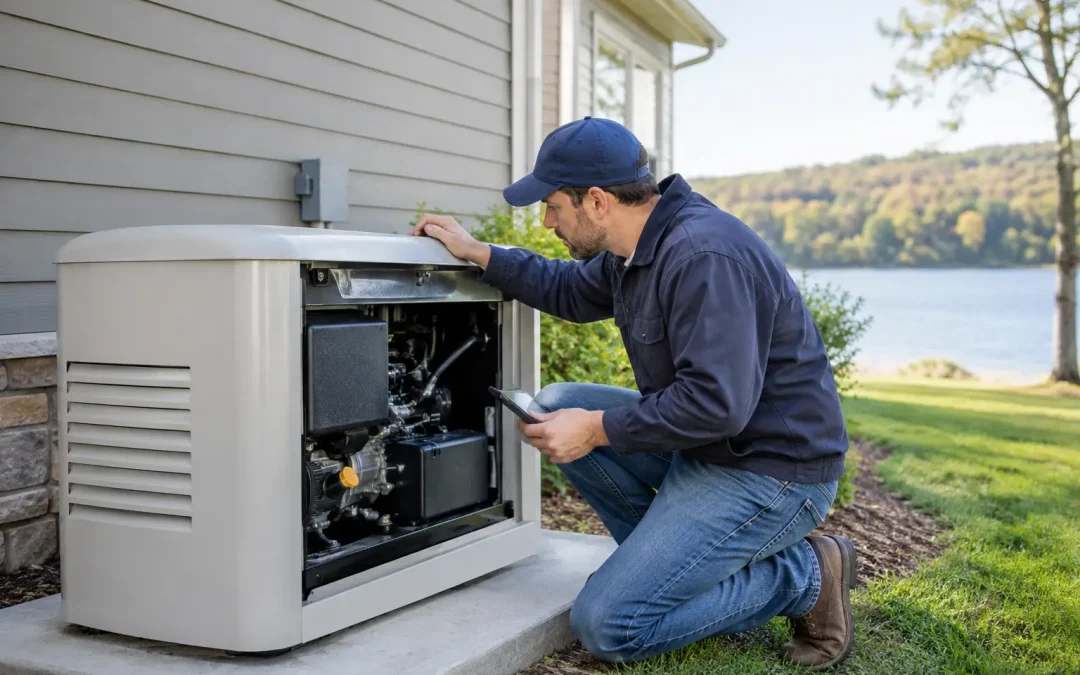
For an automatic standby generator, a basic owner-level check starts before the engine runs. Look for snow buildup, windblown debris, vegetation, rodent activity, loose panels, fluid leaks, damaged conduit, or signs that the exhaust path is obstructed. In Southwest Colorado, drifting snow and ice near the unit deserve attention after major storms. The generator needs adequate clearance and airflow to operate safely.
Then check the controller display for warning lights, fault codes, or notices that a scheduled exercise did not occur. A system may still appear normal from a distance while storing a maintenance alert that needs attention.
Exercise run versus real load test
Most standby generators are programmed to run an exercise cycle on a regular schedule, often weekly. This is useful for circulating fluids, charging the battery, and identifying an obvious no-start condition. It does not always prove that the generator can accept the home’s electrical load or that the transfer switch will move the house from utility power to generator power.
A true operational test includes a controlled transfer to generator power. The technician will verify that the generator starts, the automatic transfer switch changes over correctly, designated circuits receive power, and the system returns to utility power properly. They can also watch for voltage or frequency irregularities and assess whether the generator is operating comfortably within its capacity.
Load testing matters because engines and electrical components behave differently once demand is applied. A generator that idles well may struggle when the furnace, well pump, refrigerator compressors, internet equipment, and lighting come on together. Testing under a planned load exposes those problems in a controlled setting rather than during a storm.
For homes that sit vacant, arrange a load test when someone can be on site to observe the property. Avoid testing during severe weather, when a real outage is more likely, or immediately before an extended absence if a concern has not been resolved. A test is successful only if there is time to respond to what it finds.
Check the systems that matter during an outage
During a supervised transfer test, walk through the home and verify the equipment you expect to operate. Do not rely only on the generator’s sound or the controller’s status message.
Confirm that heating equipment receives power and can call for heat, particularly if the house depends on a forced-air furnace, boiler controls, circulation pumps, or a heat pump. Check refrigerator and freezer operation, well or sump systems where applicable, security panels, gate access, internet equipment, garage doors, and any remote monitoring devices. If the property uses a septic pump, water-treatment equipment, or an electric fireplace as part of its winter readiness plan, clarify whether those circuits are backed up.
This is also the right time to identify nonessential equipment that should remain off. Electric vehicle chargers, hot tubs, saunas, large resistance heaters, and some cooking appliances can create substantial demand. The answer is not always to add a larger generator. Sometimes a better approach is to prioritize essential circuits or use load-management controls so the generator serves the systems that protect the home first.
Fuel, batteries, and altitude deserve attention
Fuel issues are a common reason a generator fails when it is needed. Propane systems should have an appropriate reserve based on the generator’s expected run time and the home’s other propane demands. During cold spells, fuel planning must account for heating use as well as generator use. A tank that looks adequate for a brief exercise cycle may not provide the margin needed for a multi-day outage.
Natural-gas generators avoid on-site fuel storage, but their supply and pressure should still be evaluated by the installer or fuel provider, especially if other gas appliances have been added. Diesel generators require particular attention to fuel condition, water contamination, and storage duration.
The starting battery is another frequent weak point. Generator batteries can lose capacity gradually, and mountain temperature swings are not forgiving. A technician should test battery condition and charging performance during scheduled service rather than waiting for a low-battery alert.
Durango-area elevations also affect engine output. A generator installed at elevation may have less available capacity than its nameplate rating suggests, and that reduction should be considered when evaluating actual household load. If a system was sized elsewhere or selected before significant home improvements, ask a qualified professional to review the installation.
Keep a simple testing record
A short written record turns maintenance into useful property knowledge. After each exercise or professional service visit, note the date, run time, controller status, fuel level, weather conditions, and any issue observed. For a transfer test, record which systems were confirmed operational and whether any circuits did not behave as expected.
This documentation is especially helpful for an absentee owner. It gives a home manager, service technician, or family member a clear history instead of forcing them to reconstruct what happened from memory. It also helps distinguish a one-time alert from a recurring issue.
Remote generator monitoring can add another layer of visibility by reporting exercise results, battery warnings, fault codes, or run hours. It is useful, but it is not a substitute for periodic on-site inspection. A notification that the generator ran does not confirm that snow has not drifted against the enclosure or that a fuel supplier has not missed a delivery.
Set a practical service rhythm
The manufacturer’s maintenance schedule should guide the timing, but most standby systems benefit from regular exercise, periodic professional inspection, and a planned transfer/load test at least annually. Systems with frequent use, older batteries, diesel fuel, or complex whole-house loads may need more attention.
For second homes, it makes sense to coordinate generator review with the property’s broader seasonal oversight. A local inspection can confirm the unit’s physical condition, check for storm-related obstructions, review fuel status, and coordinate qualified service if the controller shows an alert. That kind of follow-through is often what keeps a minor maintenance item from becoming an arrival-day problem.
The best generator test is not the most dramatic one. It is a calm, documented check performed before the property needs backup power, leaving the home ready for the conditions Colorado can bring.