
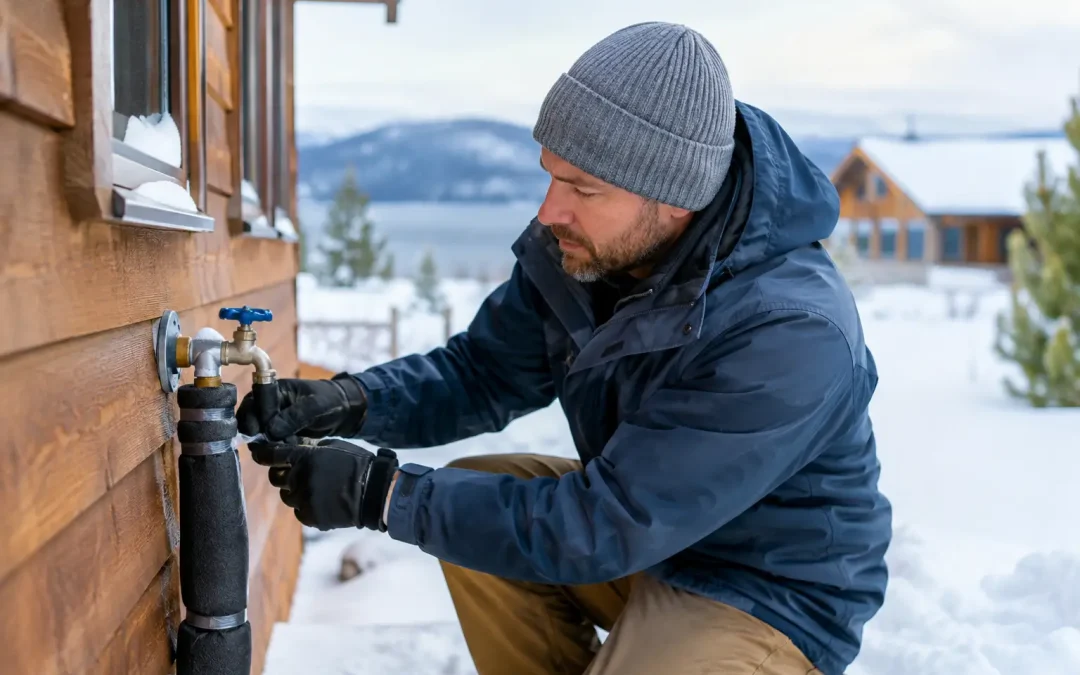
A frozen pipe recovery example is most useful when it shows what happens after the first warning sign, not just how to prevent the problem. For a second-home owner, that warning may be a low-temperature alert, an unusual water-use reading, a call from a neighbor, or a routine property inspection that finds water where it does not belong. In a mountain home, the difference between a contained repair and a costly restoration often comes down to how quickly someone can assess the situation, shut off water, and coordinate the right professionals.
This is a representative scenario based on common winter conditions in Southwest Colorado, rather than an account of a specific homeowner or property.
A frozen pipe recovery example: from alert to repair
Imagine a home outside Durango that has been unoccupied for several weeks in January. The home is heated, but a cold snap brings several nights of low temperatures. A temperature sensor in a utility-area crawlspace reports a reading below its normal range. During a scheduled property visit the following morning, the home manager notices that the heat is operating but the crawlspace is unusually cold.
There is no standing water yet. However, a supply line running along an exterior wall has frozen, and a small fitting has begun to seep as the pipe warms. This is the moment when the response matters most. Water does not always appear immediately when a pipe freezes. The pipe may be blocked by ice, then leak only after temperatures rise and pressure returns to the line.
The first priority is not to start thawing the pipe aggressively. It is to understand whether there is an active leak, whether the water supply can be safely isolated, and whether the home has heat and electrical service. If water is visible, the main water supply should be shut off as soon as practical. A local, qualified plumber should then determine the source of the issue and make the appropriate repair.
In this example, the shutoff valve is accessible and works properly. Water is turned off, the affected area is documented with photos, and a plumber is contacted. Because the leak was identified early, the damage is limited to damp insulation and a small section of wall material. A water-mitigation professional may still be needed if moisture has entered concealed spaces, but the scope is far different from a prolonged, undiscovered leak.
Why frozen-pipe damage can escalate after temperatures rise
Frozen pipes are deceptive because the visible event and the damaging event may occur at different times. A pipe can freeze overnight without splitting. When outdoor temperatures climb, the ice plug begins to thaw, water pressure returns, and a crack or failed fitting reveals itself.
This is especially relevant for seasonal homes. An owner may receive a weather alert, see that temperatures have improved, and assume the risk has passed. In reality, the 24 to 48 hours after a severe freeze can be a critical monitoring period. Homes with plumbing in crawlspaces, exterior walls, garages, mudrooms, unconditioned storage areas, and beneath cabinets deserve particular attention.
Not every frozen pipe will burst, and not every leak requires extensive restoration. The outcome depends on pipe material, location, water pressure, how long the line remained frozen, insulation quality, indoor temperature, and whether the home was occupied or observed. That uncertainty is precisely why a measured, timely response is better than waiting for evidence of a major problem.
The practical response sequence
A good recovery process follows a clear order. The first call should focus on conditions at the home: Is water running? Is the heat working? Has the main supply been shut off? Is there a risk to electrical equipment or finished areas?
If water is present near outlets, electrical panels, appliances, or other electrical components, avoid entering the area or handling equipment until it can be evaluated safely. If there is significant active water flow and the main shutoff cannot be located or operated, an emergency plumbing professional is the appropriate next step.
Once the immediate water source is controlled, the property needs a careful assessment. That includes identifying the failed pipe or fitting, checking adjacent rooms and lower levels, and looking for water migration behind baseboards, beneath flooring, or into insulation. Surface dryness does not necessarily mean the area is dry enough to avoid mold or material damage. Qualified mitigation professionals use moisture-reading equipment to evaluate concealed areas and recommend drying or material removal when needed.
Documentation is worth doing well. Photos, dates, temperature readings, sensor alerts, plumber findings, invoices, and a concise timeline can help an owner understand what happened and may be useful when communicating with an insurer. The goal is not to assign blame before the facts are known. It is to preserve a reliable record while details are fresh.
What the repair should address beyond the broken pipe
Replacing the failed section is necessary, but it may not be sufficient. The better question is why that portion of the plumbing became vulnerable in the first place.
A qualified plumber may find that the pipe lacked insulation, passed through an unsealed exterior-wall cavity, sat too close to a crawlspace vent, or was exposed because cabinet doors remained closed around plumbing during an extended cold period. In some homes, the issue is not a single weak spot but an imbalance in the heating system that leaves a remote room colder than the thermostat suggests.
The right long-term correction depends on the home. Adding insulation can help, but insulation alone does not create heat. Sealing air leaks, protecting plumbing from cold crawlspace air, adjusting heat distribution, insulating vulnerable sections correctly, and installing approved heat cable where appropriate may all be part of the solution. A licensed professional should recommend work based on the actual conditions, rather than applying the same fix to every home.
For a second home, it is also wise to review the water-control strategy. Some owners choose to shut off the main water supply when the residence will be empty for an extended period, while maintaining heat. Others use monitored automatic shutoff equipment designed to respond to unusual water flow. These choices involve trade-offs. Turning off water can reduce the severity of a supply-line leak, but it may not suit every plumbing configuration or homeowner routine. Automatic systems require proper installation, testing, and ongoing attention.
The overlooked role of inspection and communication
A freeze event is often described as a plumbing problem, but for an absent homeowner it is equally an oversight problem. Someone needs to notice the early signal, know where the shutoff is located, communicate clearly with the owner, and coordinate qualified vendors without losing time.
A thorough home inspection during cold weather does more than confirm that the thermostat has power. It can include checking interior temperatures in vulnerable zones, listening for unusual mechanical-system operation, observing crawlspace and utility-area conditions, looking for moisture, and confirming that access routes remain manageable for service providers. The exact scope should reflect the property, since a hillside home, historic residence, and newer in-town home can have very different cold-weather weak points.
Clear communication also reduces stress during an already disruptive event. Homeowners should receive a straightforward update: what was found, what has been done to stop further damage, which professionals are involved, what decisions may be needed next, and when the next update will arrive. Good oversight is not about creating alarm. It is about giving the owner accurate information and a practical path forward.
Questions to ask before the next cold spell
After repairs are complete, take time to walk through the event with the people responsible for the home. Confirm the location and operation of the main water shutoff. Review who receives temperature or leak alerts and whether their contact details are current. Ask whether the home has any spaces that consistently run colder than the rest of the house.
It is also useful to confirm access arrangements for trusted plumbers, restoration professionals, and heating contractors. Snow, locked gates, a steep driveway, or an unavailable keyholder can add hours to a response. For homes left vacant part of the year, those logistical details are part of protecting the property, not an afterthought.
Elevation Home Management helps owners coordinate inspections, monitor changing conditions, and oversee qualified local professionals when a property concern arises. The value is in having informed eyes on the home and someone prepared to handle every detail while the owner makes decisions from wherever they are.
A frozen pipe incident does not have to define a winter season. With early detection, a controlled response, and thoughtful corrections afterward, it can become a useful lesson in how the home performs under real mountain conditions – and how to make it better prepared for the next cold night.